
Mold Remediation Cost in Colorado Springs: Complete 2026 Guide
What Does Mold Remediation Cost in Colorado Springs?
If your Colorado Springs home has visible mold, a musty smell, or recent water damage that has not been fully dried, you are probably asking the same question every homeowner asks first: how much is this going to cost?
The honest answer is that mold remediation pricing varies more than almost any other home service, because the scope is dictated by what is found, not by what is initially visible. But there are reliable industry ranges you can use to set expectations before you ever pick up the phone.
According to 2026 industry data from Angi and HomeAdvisor, professional mold remediation in the United States typically costs:
- $1,200 to $3,750 for most projects, with a national average around $2,300 to $2,400
- $10 to $25 per square foot of affected area for standard remediation work
- $15 to $30 per square foot when wall cavity access, hidden mold, or specialized containment is required
- $10,000 to $30,000+ for whole-house remediation involving multiple areas or major water intrusion
These are national averages. Costs in Colorado Springs typically land in the middle of these ranges, slightly below the most expensive coastal markets but slightly above lower-cost Midwest cities, due to local labor rates and the complexity of high-altitude, freeze-thaw climate conditions.
This guide breaks down the real cost factors, why mold pricing varies so much, and what every Colorado Springs homeowner should know before hiring a remediation company.
Disclaimer: This guide provides general information about mold remediation costs based on published industry data. Every home and every mold situation is different. Best Option Restoration of Colorado Springs is a restoration company, not a mold testing laboratory or insurance advisor. Always get a written estimate based on a professional inspection of your specific property.
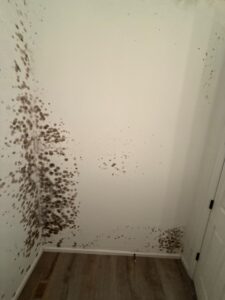
What Mold Remediation Actually Includes
Before getting into cost factors, it helps to understand what professional remediation involves. The IICRC S520 mold remediation standard—the industry benchmark—defines proper remediation as more than just cleaning visible mold from a surface.
Professional mold remediation includes:
- A pre-remediation assessment to identify the extent and source
- Containment of the affected area to prevent spore spread
- HEPA-filtered air scrubbing during removal
- Physical removal of contaminated materials (drywall, insulation, carpet)
- Cleaning and treatment of remaining structural materials
- Source moisture correction so the mold does not return
- Post-remediation verification to confirm the work was successful
If a company offers to “remove mold” without addressing the moisture source, or proposes spraying a sealant over visible mold without physical removal, that is not remediation by IICRC standards. It is cosmetic. And it almost always means the mold returns within weeks.
Cost by Location in Your Home
Where the mold is located dramatically affects the price, because access difficulty drives labor time. Based on industry averages reported by Angi and HomeAdvisor for 2026:
Bathroom mold remediation: $500 to $2,000
The most common and least expensive remediation type. Daily moisture and poor ventilation make bathrooms the #1 mold growth location in homes nationwide.
Attic mold remediation: $1,000 to $4,000
Common in Colorado Springs because of roof leaks from hail damage, inadequate ventilation, and bathroom exhaust fans venting into the attic instead of outside. Severe attic mold from undetected long-term roof leaks can run $7,000 or more.
Basement mold remediation: $500 to $3,000
Common in older Colorado Springs homes due to foundation seepage and snowmelt pressure. Costs increase significantly when mold is found behind finished walls or paneling.
Crawl space mold remediation: $500 to $2,000
Often less expensive than other areas because the spaces are typically smaller. Costs rise sharply if encapsulation is recommended after remediation.
Wall mold remediation: $1,000 to $20,000
The widest range of any category. Surface mold on drywall is treatable. Mold behind drywall, in insulation, or in framing typically requires partial demolition and replacement, which is where costs climb fast.
HVAC system mold: $3,000 to $10,000
Specialized remediation that requires complete duct cleaning, coil treatment, and sometimes component replacement. HVAC mold spreads spores through every room in the home, which is why it requires the most aggressive response.
Whole-house mold remediation: $10,000 to $30,000+
Required after major water intrusion events like burst pipes, sewage backups, or undetected long-term roof leaks. Severely affected larger homes can run $50,000 or more once rebuild costs are included.
What Drives the Final Cost
Beyond location, several factors push your total bill up or down:
1. Size of the affected area.
Most contractors price per square foot of contaminated surface area, not your home’s total square footage. A 50-square-foot bathroom mold problem is fundamentally different from a 500-square-foot basement mold problem.
2. Type of mold.
Despite what older marketing claims suggest, the CDC and Harvard Health both confirm that black mold is not necessarily more toxic than other types of mold. However, remediation of suspected toxigenic mold typically costs 25 to 50 percent more because of additional containment, full-face respirators, and specialized disposal requirements.
3. Hidden vs. visible mold.
Mold that has spread behind drywall, into insulation, or under flooring requires demolition to access. This is where the $10 to $25 per square foot baseline jumps to $15 to $30 or higher.
4. Source moisture issue.
Mold remediation that does not address the underlying water problem will fail. If the source is a roof leak, foundation crack, plumbing leak, or condensation issue, those repairs are typically separate from the remediation cost itself.
5. Required testing.
Pre-remediation mold testing typically costs $250 to $800 per Angi 2026 data, with comprehensive lab analysis up to $1,043. Post-remediation verification testing is recommended on larger jobs to confirm the work succeeded.
6. Reconstruction.
Once mold and affected materials are removed, the space needs to be rebuilt. Drywall, insulation, flooring, and paint costs are typically separate from the remediation itself, though full-service restoration companies handle both phases under one contract.
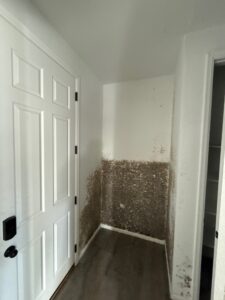
Colorado Springs Cost Factors
Several local factors affect mold remediation pricing in our area:
High altitude and freeze-thaw cycles.
At over 6,000 feet, Colorado Springs experiences extreme temperature swings. Water that enters a home in summer can freeze in winter, expand, and create hidden moisture pockets that fuel mold growth long after the original water event.
Hail-damaged roofs.
Colorado Springs is one of the most hail-prone cities in the United States. Hail damage frequently creates micro-fractures in shingles that allow slow water intrusion into attics, leading to attic mold months or even years after the storm.
Older housing stock.
Many homes in Old Colorado City, Old North End, and other established neighborhoods have plumbing, roofing, and ventilation systems from the 1970s and 1980s. These systems are statistically more likely to fail and create the conditions for mold growth.
Inadequate attic ventilation.
Many homes in Colorado Springs—particularly those built during the development boom of the 1990s and 2000s—were constructed with marginal attic ventilation. When combined with bathroom exhaust fans that vent into the attic instead of outside, moisture can build up quickly.
Does Homeowners Insurance Cover Mold Remediation?
This is one of the most important questions for any homeowner facing mold. The short answer: it depends on the cause.
Mold is typically covered when it results from a sudden, accidental, covered peril ó such as a burst pipe, appliance failure, or storm-related water damage. In these cases, mold remediation is treated as part of the water damage claim.
Mold is typically NOT covered when it results from gradual leaks, deferred maintenance, neglect, or chronic high humidity. Most homeowners policies also cap mold-specific coverage at $5,000 to $10,000 regardless of the actual remediation cost.
For a complete walkthrough of how Colorado homeowners insurance handles water damage and mold claims, see our companion guide: Does Homeowners Insurance Cover Water Damage Restoration in Colorado Springs?
When You Can Handle Mold Yourself vs. When to Call a Pro
The EPA’s official guidance is clear: homeowners can typically handle mold contamination of less than 10 square feet (roughly a 3-foot by 3-foot area) themselves, provided they:
- Wear an N95 respirator, gloves, and eye protection
- Ventilate the area while working
- Use a HEPA vacuum for cleanup
- Address and fix the underlying moisture source
Above 10 square feet ó or any time mold involves the HVAC system, has been growing for more than a few weeks, or is suspected to be inside walls or ceilings ó the EPA recommends professional remediation.
The reason is not just thoroughness. It is exposure risk. DIY mold removal frequently aerosolizes spores that the homeowner then inhales over hours of work without proper containment.
How to Avoid Paying for Mold Remediation Twice
This is the part most cost guides leave out, but it is where homeowners lose the most money.
The IICRC S520 standard distinguishes between two types of post-remediation verification:
- PRE (Post-Remediation Evaluation): the remediation company’s own self-check
- PRV (Post-Remediation Verification): an independent third-party inspection
A self-check alone does not guarantee the work was successful. For larger remediation projects, especially those involving health concerns, consider having a qualified Indoor Environmental Professional perform an independent verification before authorizing rebuild.
Other practical tips to control cost:
- Get multiple bids from IICRC-certified companies before committing
- Ask whether the bid includes containment, HEPA filtration, and disposal ó not just removal
- Confirm the source moisture issue is addressed in the scope
- Ask for proof of mold-specific liability insurance
- Document everything with photos before, during, and after
Why Acting Quickly Saves Money
Mold begins growing on damp materials within 24 to 48 hours of moisture exposure, according to the EPA and CDC. Every day a water-damaged area sits without professional drying, the cost grows.
A $1,200 dry-out job left untreated for a week can become a $6,000 mold remediation project. The same project, left for a month, can become a $15,000 demolition and rebuild.
This is why the single most effective cost-control strategy after any water event is calling a certified restoration team within hours, not days.
Getting an Accurate Estimate for Your Home
National averages and per-square-foot ranges are useful for setting expectations, but the only way to get a real number is a professional inspection. A reputable remediation company should:
- Provide a free initial inspection
- Walk you through what they found and why
- Give you a written scope of work, not just a verbal estimate
- Explain what is and is not included
- Discuss insurance documentation if you plan to file a claim
If a company gives you a price over the phone without seeing the property, or pressures you to sign immediately, get a second opinion.
Best Option Restoration of Colorado Springs
Best Option Restoration of Colorado Springs is your locally owned, IICRC-certified team for mold remediation, water damage restoration, and full reconstruction. We provide free inspections, written scopes of work, and direct insurance billing on covered claims.
We work in homes across Colorado Springs, Briargate, Northgate, Broadmoor, Black Forest, Old Colorado City, Manitou Springs, Fountain, and the entire Pikes Peak region. Real local technicians. Live phone answering. No call centers.
Call (719) 619-8616 for a free mold inspection ó 24/7 emergency response.</str