
Finding mold in your home can be overwhelming, especially when the visible growth covers more than a small area or appears to extend into adjoining walls or rooms.
The first questions homeowners usually ask are:
- How far does the mold go?
- What caused it?
- Does the drywall have to come out?
- Do I need mold testing?
- How long will remediation take?
- And who puts my home back together afterward?
Professional mold remediation in Colorado Springs involves much more than spraying visible growth and calling the problem solved.
At Best Option Restoration of Colorado Springs, we believe homeowners should understand what is happening in their property, why certain steps are recommended, and what happens from the first assessment through the final rebuild.
Here is a step-by-step look at what professional mold remediation and mold removal may involve.
Key Takeaways
- Mold remediation should address the moisture conditions that allowed mold to grow, not simply the visible surface.
- Moisture and mold can extend behind drywall, beneath flooring, inside insulation, and into other concealed materials.
- Professional remediation may involve containment, HEPA air filtration, removal or cleaning of affected materials, detailed cleaning, and structural drying.
- Mold testing can be useful in certain situations but is not automatically necessary whenever visible mold is present.
- Not every mold-remediation project requires extensive demolition.
- Best Option Restoration of Colorado Springs can handle mold remediation through complete reconstruction, including drywall, texture, paint, flooring, tile, trim, and finish repairs.
- We provide free mold remediation estimates and can assist with documentation throughout an applicable insurance claim.
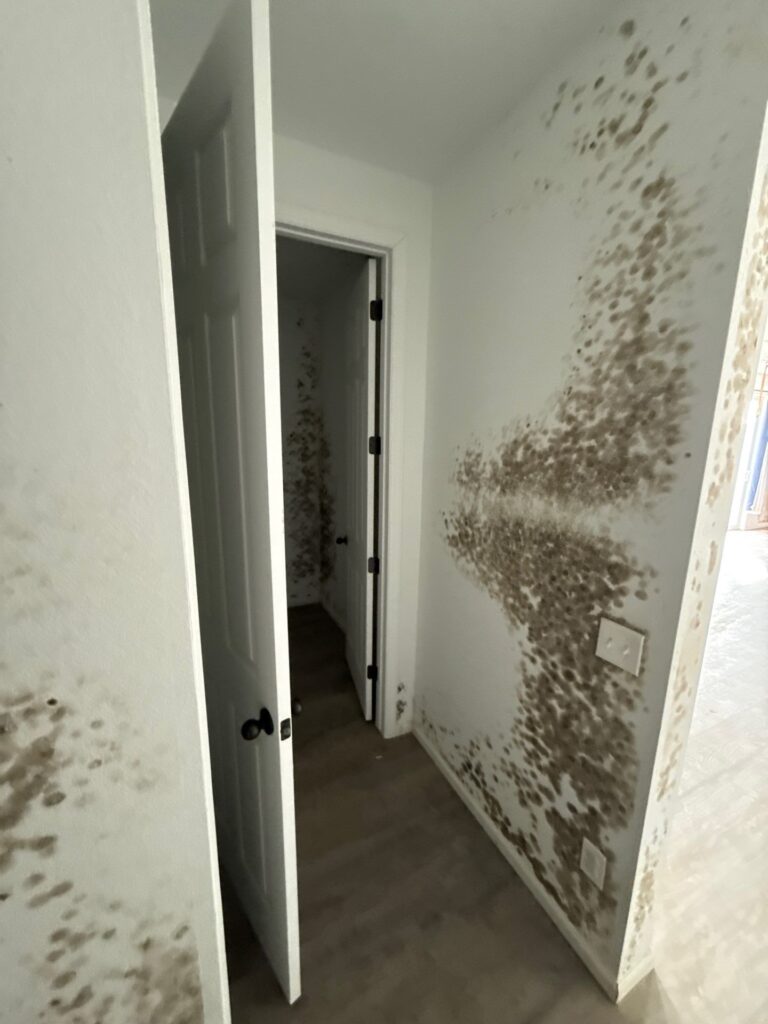
What Is Mold Remediation?
Homeowners commonly search for mold removal in Colorado Springs, while restoration professionals generally use the term mold remediation.
There is an important distinction.
“Mold removal” sounds as though the goal is simply to eliminate everything that looks like mold.
Professional mold remediation is broader. It involves addressing mold-affected materials while also evaluating the moisture conditions that contributed to the growth.
The EPA emphasizes that moisture control is the key to mold control. If mold is cleaned but the underlying water problem is not corrected, the mold problem is likely to return.
That is why professional remediation should begin with the cause of the problem, not simply the appearance of the wall.
Step 1: Identify the Moisture Source
Mold requires moisture.
Sometimes the source is obvious, such as a burst pipe or flooded basement. Other times, the moisture develops slowly and remains hidden for weeks or months.
Common causes in Colorado Springs homes can include:
- Plumbing leaks
- Appliance leaks
- Water heater failures
- Roof leaks
- Window leaks
- Basement water intrusion
- Crawl-space moisture
- Condensation
- HVAC or condensate issues
- Previous water damage that was never completely dried
The EPA recommends drying wet or water-damaged materials within approximately 24 to 48 hours because prolonged moisture creates conditions that can support mold growth.
So one of the most important questions during mold remediation is not simply:
Where is the mold?
It is:
Where is the moisture coming from?
What If the Moisture Problem Is Related to Your HVAC System?
Not every mold problem begins with a pipe or a flood.
In some homes, excess moisture may be connected to an HVAC system, condensate drain, humidifier, cooling equipment, ventilation issue, or indoor humidity problem.
The EPA specifically recommends keeping air-conditioning drip pans clean and drain lines unobstructed and notes that HVAC systems require special consideration when they are part of an identified moisture problem.
When our restoration team identifies a condition that appears to require HVAC service, Best Option Restoration of Colorado Springs can help connect homeowners with trusted local professionals rather than attempting mechanical work outside our area of expertise.
For HVAC-related concerns, we often refer homeowners to Pendleton Heating & Cooling, a local Colorado Springs company. Pendleton services air-conditioning systems, drains and P-traps, humidifiers, indoor-air-quality equipment, and related HVAC components.
The roles are different but complementary:
The HVAC professional addresses the mechanical source when needed. Best Option Restoration of Colorado Springs addresses the mold-affected materials, water damage, structural drying, and reconstruction.
Correcting both sides of the problem can be important in helping prevent the same moisture condition from continuing.
Step 2: Determine How Far the Moisture and Mold Extend
What you see on the wall may not show where the affected area ends.
Moisture can travel:
- Behind drywall.
- Under flooring.
- Behind baseboards.
- Inside insulation.
- Along framing.
- Under cabinets.
- Into adjoining rooms.
This is why professional moisture detection can be important.
Depending on the conditions found, our team may use professional moisture-detection equipment to help determine whether surrounding materials remain wet and whether additional areas warrant investigation.
This does not mean automatically opening every wall in the house.
Good restoration should be targeted.
The goal is to understand what is actually affected and avoid making the project larger than necessary.
Step 3: Decide Whether Mold Testing Is Needed
One of the most common questions homeowners ask is:
Do I need mold testing before mold remediation?
Not always.
The EPA states that when visible mold growth is present, sampling is unnecessary in many cases. Testing may be more useful when mold is suspected but hidden, the extent of the problem is unclear, or additional information would meaningfully affect the remediation plan.
When testing is appropriate, Best Option Restoration of Colorado Springs can coordinate with trusted independent mold-testing professionals in the Colorado Springs area.
Our goal is to help homeowners understand whether testing will actually provide useful information rather than treating testing as an automatic expense.
Step 4: Establish Containment When Appropriate
Once mold-affected materials are disturbed, dust and debris can be created.
Depending on the size and conditions of the project, professional remediation may include containment to separate the affected work area from unaffected portions of the home.
Containment can include:
- Plastic barriers
- Sealed openings
- Controlled access
- Air-management equipment
Its purpose is not to make the project look more dramatic.
It is to help keep remediation activities controlled within the intended work area.
When interviewing a mold remediation company, ask:
“How will you keep dust and debris from the remediation area from spreading into the rest of my home?”
A qualified contractor should be able to explain the process clearly.
Step 5: Use HEPA Air Filtration When Appropriate
Professional mold remediation may also involve HEPA-filtered air filtration equipment.
HEPA filtration can be used as part of controlling airborne particles while affected materials are being disturbed or removed.
But equipment alone is not mold remediation.
A professional remediation plan should consider:
- Moisture.
- Containment.
- Affected materials.
- Cleaning.
- Drying.
That is why homeowners should be cautious of approaches that focus exclusively on setting equipment or spraying visible growth.
Step 6: Determine What Can Be Cleaned and What Needs to Be Removed
Not every building material is handled the same way.
Some hard surfaces may be able to be cleaned and dried.
Porous or absorbent materials can be more complicated because mold and moisture may extend into the material itself. EPA guidance notes that moldy porous materials sometimes have to be discarded because mold can grow within spaces and crevices that are difficult to clean completely.
Affected materials may include:
- Drywall
- Insulation
- Carpet
- Carpet padding
- Ceiling materials
- Baseboards
- Wood products
- Flooring
A professional mold-remediation company should be able to answer:
What needs to be removed?
What can be cleaned?
Why?
More demolition does not automatically mean better remediation.
But attempting to save building materials that cannot reasonably be cleaned simply to make an estimate smaller is not necessarily better either.
The scope should be based on the actual conditions found in the home.
Does Mold Remediation Always Require Removing Drywall?
No.
Discovering mold does not automatically mean an entire room needs to be gutted.
Whether drywall needs to be removed depends on factors such as:
- The extent of the affected area
- Condition of the material
- Whether moisture remains
- What is occurring behind the finished surface
- What is discovered during remediation
At Best Option Restoration of Colorado Springs, our goal is to address what actually requires attention while avoiding unnecessary demolition whenever materials can reasonably remain.
Homeowners deserve to understand what is being removed and why.
Step 7: Clean the Remediation Area
Removing affected drywall or insulation is not the end of mold remediation.
The work area and remaining surfaces also require appropriate cleaning based on the conditions of the project.
Professional procedures may include detailed cleaning and HEPA vacuuming of appropriate surfaces.
The objective is not simply to make visible discoloration disappear.
It is to address the affected materials and controlled work environment methodically.
Step 8: Dry Remaining Moisture
Mold remediation and water damage restoration are often closely connected.
If framing, subflooring, or other building materials still contain excess moisture, they may need to be dried before reconstruction begins.
Professional structural drying may involve:
- Air movers
- Dehumidifiers
- Moisture meters
- Ongoing moisture monitoring
This matters because installing new drywall, flooring, or paint over materials that remain wet may simply conceal another moisture problem.
Before reconstruction begins, the underlying structure needs to be ready for the rebuild.
Step 9: Document the Damage and Restoration Work
Documentation becomes especially important when an insurance claim may be involved.
Depending on the project, restoration documentation may include:
- Before and during photographs
- Moisture readings
- Areas and materials affected
- Materials removed
- Scope of work
- Estimates
- Restoration work performed
- Reconstruction requirements
Best Option Restoration of Colorado Springs assists homeowners throughout all phases of an applicable insurance claim, including damage photographs, moisture readings, scopes, estimates, and other restoration documentation an insurance carrier or adjuster may require.
The insurance company ultimately determines coverage under the individual policy, but thorough documentation helps create a clear record of the damage and work performed.
Step 10: Rebuild the Damaged Area
This is one of the most overlooked parts of mold remediation.
What happens once affected drywall, flooring, trim, or other building materials have been removed?
Some mold-remediation companies complete the remediation and then leave the homeowner to locate another contractor.
That can mean:
- Another estimate.
- Another schedule.
- Another company.
- Another person who has to learn the history of the project.
We offer a different approach.
From Mold Remediation to Complete Reconstruction
Best Option Restoration of Colorado Springs can take the project from mold remediation through the complete rebuild.
Depending on what was affected, our reconstruction services may include:
- Drywall replacement and repair
- Texture matching
- Interior painting
- Flooring
- Tile
- Trim
- Finish work
- Related reconstruction repairs
That means homeowners can work with one local restoration company from mold remediation or water damage through the finished room.
For homeowners already dealing with the disruption of property damage, that continuity can make the process significantly easier to manage.
How Long Does Mold Remediation Take?
There is no single timeline for every mold project.
A smaller contained project may require only a few days of remediation work.
More complicated projects may take longer depending on:
- Size of the affected area
- Number of rooms involved
- Hidden mold
- Remaining moisture
- Accessibility
- Materials requiring removal
- Repairs to the moisture source
- Reconstruction
A professional restoration company should give you a realistic timeline based on the conditions in your property rather than promising the same timeline for every project.
How Much Does Mold Remediation Cost in Colorado Springs?
Cost is one of the first questions homeowners ask.
The price can vary based on:
- Size of the affected area
- Location of the mold
- Materials involved
- Containment requirements
- Accessibility
- Amount of removal required
- Structural drying
- Reconstruction
Best Option Restoration of Colorado Springs offers free mold remediation estimates so homeowners can understand the scope and expected costs before work begins.
For a more detailed breakdown of local pricing factors, read our 2026 Mold Remediation Cost Guide for Colorado Springs. Your existing guide covers how location, hidden mold, containment, moisture issues, and reconstruction can affect the final price.
Can Mold Return After Remediation?
Yes, if sufficient moisture returns.
That is why professional mold remediation should not focus only on visible growth.
Recurring moisture can come from:
- Plumbing leaks
- Roof or window leaks
- HVAC condensate issues
- Basement moisture
- Crawl-space moisture
- Condensation
- Previous water damage that was never fully dried
The EPA specifically warns that cleaning mold without fixing the underlying water problem makes recurrence likely.
Can You Stay in Your Home During Mold Remediation?
Sometimes.
Whether occupants can remain in the property depends on:
- Size of the remediation area
- Location of the affected materials
- Type of work being performed
- Ability to isolate the work area
- Household circumstances
This should be discussed with the remediation company before work begins.
Every home and every mold project is different.
Frequently Asked Questions About Mold Remediation in Colorado Springs
Is mold removal the same as mold remediation?
Homeowners often use the terms interchangeably.
Mold removal is the phrase many people search when they discover mold. Mold remediation refers to the broader professional process of addressing affected materials, controlling the work area, cleaning, addressing moisture, and restoring the property.
Do I need mold testing before mold remediation?
Not always.
When visible mold is already present and the moisture source is reasonably understood, testing may not change the remediation plan.
Testing can be helpful when mold is suspected but hidden, the extent is unclear, or additional information is needed to determine the appropriate approach.
Does mold remediation always mean tearing out walls?
No.
Whether drywall or other building materials require removal depends on their condition, the extent of the affected area, remaining moisture, and what is found during remediation.
A reputable contractor should explain what needs to be removed and why.
Does homeowners insurance cover mold remediation?
Sometimes.
Coverage usually depends on what caused the mold and the terms of the individual insurance policy. Mold resulting from a sudden covered water event may be treated differently from mold related to long-term leaks, maintenance, or chronic moisture.
Best Option Restoration of Colorado Springs can assist with documentation during an applicable claim, while the insurance carrier makes the final coverage determination.
Do you provide mold removal in Colorado Springs?
Yes.
Best Option Restoration of Colorado Springs provides professional mold remediation and mold removal services for homes and businesses dealing with visible mold, recurring mold, hidden moisture, and mold following water damage.
Do you rebuild after mold remediation?
Yes.
We provide complete reconstruction after mold remediation, including drywall, texture, paint, flooring, tile, trim, and related finish repairs when needed.
That allows homeowners to work with one restoration company from remediation through the completed rebuild.
Need Mold Remediation or Mold Removal in Colorado Springs?
Finding mold in your home is stressful enough.
You should not also have to guess what happens next.
Best Option Restoration of Colorado Springs provides professional mold remediation and mold removal in Colorado Springs with a process focused on moisture conditions, affected materials, careful remediation, clear communication, and complete reconstruction when repairs are needed.
Our IICRC-certified restoration team can help with:
- Mold remediation
- Mold removal
- Moisture detection
- Water damage restoration
- Structural drying
- Containment and HEPA air filtration
- Insurance documentation
- Complete reconstruction
And if drywall, flooring, trim, or other materials need to be removed, we can continue through the final repairs.
From mold remediation to the finished room, one local restoration company can help manage the entire process.
Contact Best Option Restoration of Colorado Springs for a free mold remediation estimate and a clear explanation of your next steps.