
Introduction
If you have spotted dark, fuzzy patches on a wall, ceiling, or in your basement, you may be looking at black mold. For most Colorado Springs homeowners, this discovery raises three urgent questions: Is it dangerous? How do I get rid of it safely? And how much will it cost? This guide answers all of them. As a locally owned, IICRC-certified mold remediation company serving the Pikes Peak region, Best Option Restoration of Colorado Springs has handled black mold cases in homes from Briargate to Old Colorado City to Manitou Springs. We have seen what works, what does not, and what every homeowner needs to know before deciding what to do next. Quick answer: Black mold (often Stachybotrys chartarum) is a greenish-black fungus that grows in homes with chronic moisture problems. While research on its toxicity is mixed, it can trigger serious respiratory symptoms and should never be cleaned with household bleach or ignored. Professional remediation is the only way to fully eliminate it and prevent regrowth. If you have an immediate concern, call us anytime at 719-619-8616 for a free in-home mold assessment.
What Is Black Mold?
Black mold is a common name for Stachybotrys chartarum, a greenish-black fungus that grows on water-damaged building materials. It is one of dozens of mold species that can grow indoors, but it has earned a reputation as the most concerning because of its possible link to mycotoxin production and respiratory illness. According to the Cleveland Clinic, S. chartarum is the species most people are referring to when they say “black mold.” It grows and spreads on materials that contain a lot of cellulose, including paper products, wood, and drywall. The CDC notes that constant moisture from water damage, leaks, condensation, water infiltration, or flooding is required for it to grow. Black mold is not the only mold that appears dark in color. Cladosporium, Aspergillus, and Alternaria can all appear black or very dark green. Visual identification alone is not enough to confirm Stachybotrys chartarum — that requires lab testing. But for the purposes of homeowner action, the response is the same: any black or dark mold growth indoors needs professional attention.
How to Identify Black Mold
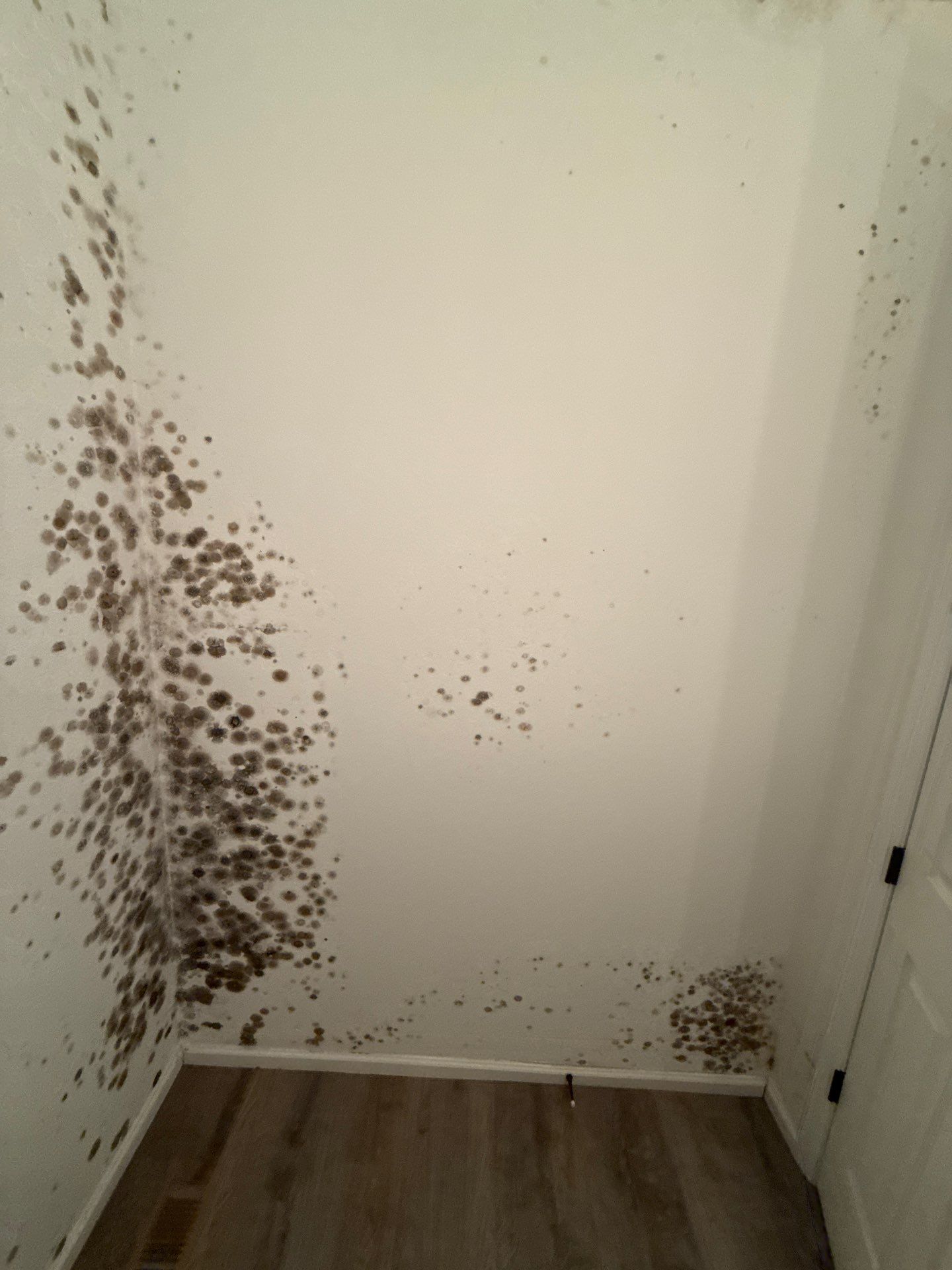
Black mold has several telltale visual and sensory characteristics. If you notice any of the following, treat it as a potential black mold problem:
Visual Signs
Dark green to black patches on walls, ceilings, or behind furniture
Circular clusters that appear fuzzy when dry or slimy when wet
Dark rings on drywall, water stains, or bubbling paint
Growth around plumbing fixtures, water heaters, or HVAC vents
Spots that return after surface cleaning
Sensory Signs
A strong, persistent musty or earthy smell
A “wet rotting wood” odor in basements, bathrooms, or closets
A smell that lingers even after thorough cleaning
Allergy symptoms that improve when you leave the home
Where Black Mold Hides in Colorado Springs Homes
While Colorado’s dry outdoor air gives homeowners a false sense of security, black mold thrives in the enclosed, moisture-trapping spaces inside your home. The most common locations include:
Basements — especially finished basements with aging vapor barriers
Crawl spaces — where ground moisture and poor ventilation create ideal conditions
Behind drywall — particularly near plumbing in bathrooms and kitchens
Around windows — where condensation cycles repeat all winter
Inside HVAC ducts — where the temperature differential creates condensation
Under carpet padding — where slow leaks go undetected for months In attics — where roof leaks and poor ventilation combine
Is Black Mold Dangerous?
The honest answer: it depends, and the science is still evolving.
The CDC states that there is currently no test that proves an association between Stachybotrys chartarum and particular health symptoms, and the possible link to acute idiopathic pulmonary hemorrhage in infants has not been definitively proven. However, the same agency confirms that any mold growing indoors should be considered a problem that requires immediate attention regardless of species.
What is well-documented is that black mold exposure can cause real symptoms in many people, particularly those with allergies, asthma, weakened immune systems, or chronic respiratory conditions.
Common Black Mold Exposure Symptoms Short-term exposure may cause:
Coughing, sneezing, and wheezing
Nasal congestion and postnasal drip
Eye irritation
Skin rashes or dry, scaly skin
Sore throat
Headaches
Longer-term or higher-level exposure may cause:
Chronic fatigue
Persistent headaches
Worsening asthma symptoms
Sinus infections
Difficulty breathing
Who Is Most at Risk?
According to the National Institute of Environmental Health Sciences and the Asthma and Allergy Foundation of America, the people most sensitive to black mold exposure are:
Infants and young children
Elderly adults
People with asthma or chronic respiratory disease
People with mold allergies P
eople with compromised immune systems (cancer patients, organ transplant recipients, those with HIV)
Pregnant women
Pets, particularly cats and dogs with respiratory conditions
What the Research Actually Shows
Studies have linked indoor mold exposure to an estimated 4.6 million asthma cases annually in the U.S. Removing mold from a home has been shown to reduce asthma symptoms by 25 to 45 percent. The Mayo Clinic has also reported that 93 percent of chronic sinus infections may be attributable to mold exposure.
The takeaway: while you cannot panic-diagnose every cough as “toxic mold poisoning,” you also cannot dismiss black mold growth as a cosmetic issue. If you have visible black mold and unexplained health symptoms that improve when you leave home, the connection is real and should be addressed.
Why Black Mold Is a Problem in Colorado Springs Specifically
Most homeowners assume Colorado Springs’ altitude and dry climate make mold a non-issue. The reality is the opposite, and here is why.
The Altitude Trap
At 6,035 feet of elevation, Colorado Springs has notably dry outdoor air. This dries open surfaces quickly, but it creates a deceptive sense of safety. Inside enclosed wall cavities, basements, crawl spaces, and HVAC ducts, moisture gets trapped and concentrated. These environments become humidity pockets where mold can flourish unchecked, often for months before any visible sign appears.
Sudden Temperature Swings
Colorado is famous for dramatic daily temperature swings. According to the Colorado Climate Center, spring and fall regularly produce 30 to 40 degree shifts within hours. These swings create persistent condensation cycles on basement walls, cold-water pipes, and inside metal ductwork. Each condensation event leaves a trace of moisture, and over a season, that trace becomes a colony.
Construction Vulnerabilities by Neighborhood
The Colorado Department of Public Health and Environment provides indoor air quality guidance noting that older homes and homes with prior moisture events are at significantly higher risk for indoor mold growth. In Colorado Springs specifically, that translates to:
Old Colorado City and downtown historic homes: Often built without modern vapor barriers, with stone or brick foundations and original earthen-floor crawl spaces.
Briargate and Powers (1990s-2000s construction): Finished basements that are now 20 to 30 years old, with aging vapor barriers and original sump systems that have never been re-evaluated.
Mountain neighborhoods (Manitou Springs, Cascade, Woodland Park): Higher humidity from creek and canyon proximity, plus older construction styles.
East side (Black Forest, Cimarron Hills, Peyton): Well water systems, large lot sizes, and crawl-space construction styles that can hide moisture problems.
Water Damage Is Almost Always the Trigger
Mold cannot grow without moisture. In Colorado Springs, the most common moisture events that lead to black mold growth are:
Slow pipe leaks inside walls or under floors
Roof leaks during winter storms
Basement flooding from spring snowmelt or summer monsoons
HVAC condensation drips
Water heater, washing machine, or dishwasher failures
Poor bathroom or kitchen ventilation
If you have experienced any of these events in the last 12 to 24 months, your home may already have black mold growing somewhere you cannot see.
How to Get Rid of Black Mold
What Does NOT Work
Before discussing what works, here is what does not, despite what the internet might tell you:
Bleach. Bleach is great for laundry and tile grout but a complete failure on porous surfaces like drywall and wood. It only addresses surface staining and does not kill mold roots.
Vinegar. While it has some antifungal properties, it is not strong enough for established black mold colonies.
Painting over it. This traps the mold and creates an even worse problem behind the paint.
Surface cleaning alone. If the moisture source is not fixed, mold returns within weeks.
Ignoring it. Mold spreads. Every day you wait costs more in eventual remediation.
When DIY Cleaning Is Acceptable
The EPA recommends that homeowners can handle mold cleanups smaller than 10 square feet (a 3-foot by 3-foot patch) themselves, but with strict precautions:
Wear an N95 respirator, gloves, and eye protection
Seal off the area with plastic sheeting
Scrub hard surfaces with detergent and water
Discard porous items that cannot be cleaned
Fix the moisture source immediately
If the affected area is larger, hidden, recurring, or if anyone in the home has health symptoms, professional remediation is the only safe option.
What Professional Black Mold Remediation Actually Includes
Professional remediation is dramatically different from cleaning. A complete black mold remediation includes:
Inspection and moisture mapping. Identifying all visible and hidden mold, plus the moisture source feeding it.
Containment. Sealing off the work area with plastic sheeting and creating negative air pressure to prevent spore spread.
HEPA air filtration. Industrial air scrubbers running throughout the project to capture airborne spores.
Removal of affected materials. Porous materials (drywall, insulation, carpet, padding) are bagged and disposed of. Hard surfaces are cleaned and treated.
Antimicrobial treatment. Surfaces are treated to prevent regrowth.
Drying and dehumidification. Industrial equipment removes residual moisture.
Source correction. Repairing the leak, drainage issue, or ventilation problem that allowed mold to grow in the first place.
Post-work clearance. Verifying that moisture levels are within acceptable ranges before reconstruction.
If a contractor proposes to “just spray the area” or skips containment on a job of meaningful size, that is a serious red flag.
How Much Does Black Mold Removal Cost in Colorado Springs?
For detailed cost ranges, see our complete 2026 mold remediation cost guide for Colorado Springs.
In summary, most Colorado Springs homeowners pay between $1,200 and $3,750 for professional black mold remediation, with a national average around $2,300 to $2,400. Per-square-foot pricing typically runs $10 to $25.
Severe whole-house cases involving HVAC contamination or major water damage can range from $10,000 to $30,000.
Contributing factors include:
Size of the affected area
Location within the home (HVAC and whole-house cost more than bathroom)
Whether porous materials need full demolition
Hidden mold behind walls or under flooring Insurance involvement and documentation requirements
Does Insurance Cover Black Mold Remediation?
Standard homeowners insurance covers mold remediation only when the mold was caused by a covered peril, meaning a sudden and accidental event your policy already covers (such as a burst pipe).
What is generally covered:
Mold from a sudden burst pipe
Mold following a covered fire suppression event
Mold from accidental appliance failures (in some policies)
What is generally not covered:
Mold from gradual leaks left unaddressed
Mold from flooding (requires separate flood insurance)
Mold from poor ventilation or humidity issues
Mold caused by lack of maintenance
Many policies cap mold coverage at $5,000 to $10,000, even when the cause is covered. Some insurers offer mold endorsements that increase the limit. For more on this topic, see our guide to homeowners insurance and water damage restoration in Colorado Springs.
How to Prevent Black Mold in Your Colorado Springs Home
Prevention is far cheaper than remediation. The strategies below will dramatically reduce your risk:
Control Indoor Humidity Keep indoor humidity below 50 percent year-round
Use a hygrometer (under $20) to monitor humidity in basements and crawl spaces
Run dehumidifiers during summer monsoons or after any water event
Ensure bathroom and kitchen exhaust fans vent outside, not into attics
Address Moisture Events Immediately Dry any water spill or leak within 24 to 48 hours
Replace, do not just dry, water-damaged drywall and insulation
Pull up wet carpet padding and discard it
Check water heaters annually for slow leaks
Inspect washing machine hoses every 2 years and replace at first sign of bulging
Maintain Building Envelope
Keep gutters clean and downspouts directed away from the foundation
Inspect your roof annually, especially after winter storms
Re-caulk windows and exterior doors as needed
Check basement and crawl space vapor barriers every 5 to 10 years
Ensure proper grading away from the foundation
Schedule Periodic Inspections
If your home is over 20 years old, has a finished basement, or has experienced any prior water event, schedule a professional moisture inspection every 2 to 3 years. Catching moisture before it becomes mold is the single most cost-effective protection you can buy.
For more on early detection, read our guide on 7 signs hidden moisture is turning into mold in Colorado Springs.
When to Call a Professional
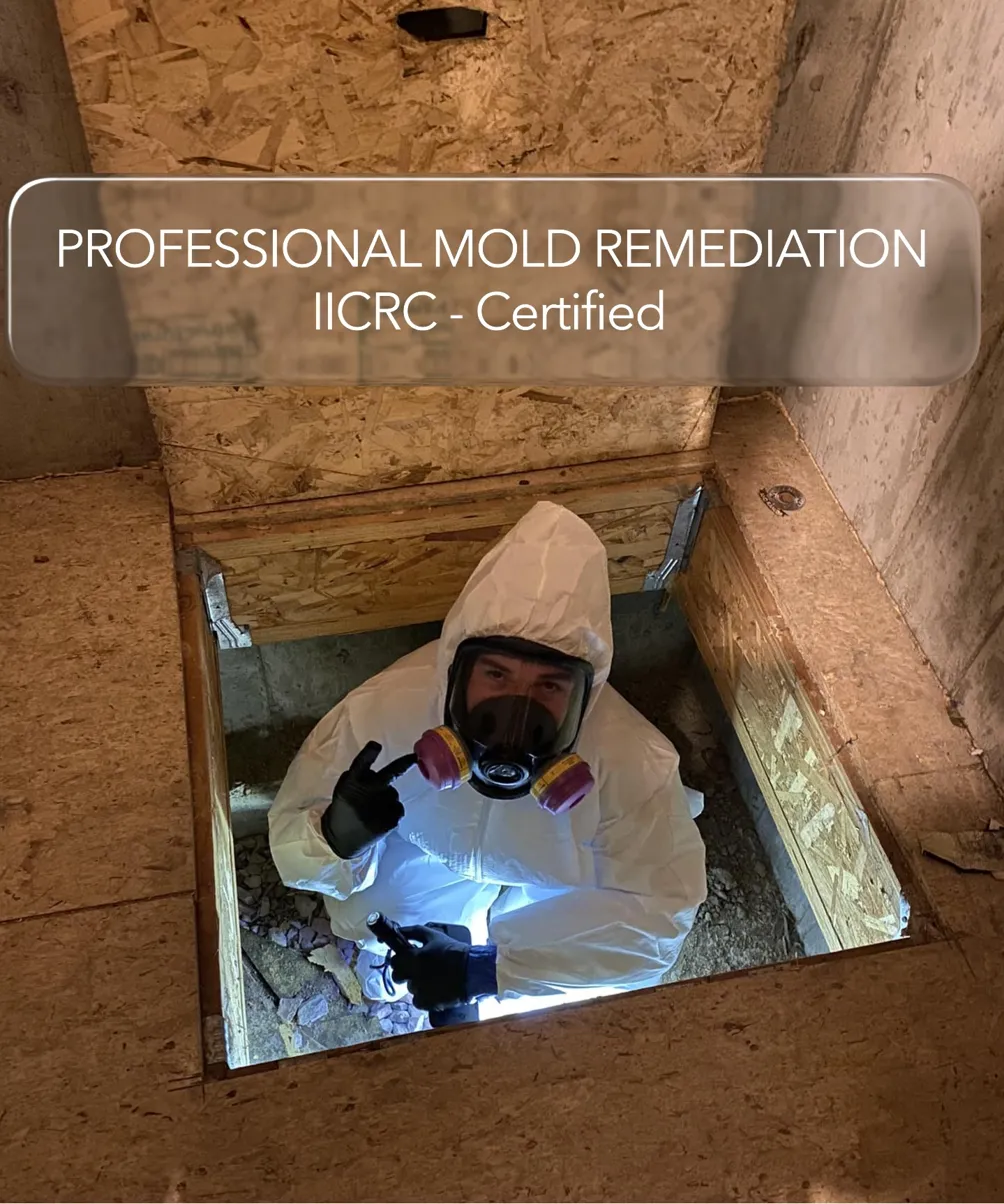
You should call a professional black mold remediation company if any of the following are true:
You can see mold growth larger than a 3-foot by 3-foot patch
Mold has returned after you cleaned it
You smell mold but cannot find the source
Anyone in your home has unexplained respiratory or allergy symptoms
Mold appears after a water damage event
You see mold in HVAC vents or smell musty air from your ducts
You are buying or selling a home with any mold history
Children, elderly family members, or anyone with health conditions lives in the home
Frequently Asked Questions
How quickly does black mold spread?
Mold can begin growing within 24 to 48 hours of any water intrusion. Black mold colonies can establish themselves in less than a week and spread aggressively over the following 30 days if the moisture source is not corrected.
Can I clean black mold with bleach?
No. Bleach does not kill mold on porous surfaces like drywall, wood, or insulation. It only addresses surface staining. The mold returns once the bleach evaporates.
What does black mold smell like?
Black mold produces a strong, persistent musty odor often described as “wet rotting wood” or “damp earth.” The smell is created by microbial volatile organic compounds released during mold metabolism. If your basement, bathroom, or HVAC system has a persistent musty smell, you likely have hidden mold.
How do I know if it is really black mold versus another mold?
Visual identification alone cannot confirm Stachybotrys chartarum. Many other mold species appear dark in color. The only way to confirm species is laboratory testing of a sample. From a homeowner action standpoint, however, the correct response is the same regardless of species: contain it, do not disturb it, and call a professional.
Does black mold come back after remediation?
If the moisture source is properly corrected, no. If the underlying problem (a leak, poor ventilation, drainage issue) is not fixed, mold will return regardless of how thorough the cleanup was. This is why professional remediation always includes source correction.
Should I leave my home during black mold remediation?
For small isolated jobs, you can usually stay. For larger projects, especially those affecting multiple rooms, HVAC systems, or involving heavy chemical treatment, your remediation company may recommend temporary relocation. Best Option Restoration of Colorado Springs will give you a clear recommendation after the initial assessment.
How long does black mold remediation take?
A small isolated area (bathroom wall, single closet) typically takes 2 to 3 days. A larger project involving multiple rooms or HVAC contamination can take 1 to 2 weeks. The actual mold removal portion is usually complete within a few days; drying and reconstruction add to the overall timeline.
Is black mold worse than other mold?
Black mold has a stronger reputation for health concerns, but in practice, any mold growing indoors at significant levels can cause health issues. Cladosporium, Aspergillus, and Penicillium are also common in Colorado Springs homes and can trigger allergic reactions and respiratory symptoms. The species matters less than the size of the colony and the moisture problem feeding it.
Take the Next Step: Free In-Home Mold Assessment
If you suspect black mold in your Colorado Springs home, do not wait. Mold spreads. Every day costs more in eventual remediation and creates more risk to your family’s health.
Best Option Restoration of Colorado Springs is a locally owned, IICRC-certified mold remediation and black mold removal company.
We provide:
Free in-home mold assessments
24/7 emergency response
Professional containment and HEPA filtration
Complete remediation with source correction
Direct work with your insurance company
Service across Colorado Springs, Briargate, Old Colorado City, Powers, Manitou Springs, Black Forest, Fountain, Security-Widefield, Cimarron Hills, and the greater Pikes Peak region
Call 719-619-8616 anytime, day or night, for your free assessment.
Or learn more about our other restoration services:
Water Damage Restoration Process: What Actually Happens in Your Colorado Springs Home
Mold Remediation Cost in Colorado Springs: Complete 2026 Guide
Attic Mold in Colorado Springs: Causes, Warning Signs, and What to Do Next
Water Damage in Colorado Springs: 7 Signs Hidden Moisture Is Turning Into Mold
This guide was written by the team at Best Option Restoration of Colorado Springs, a locally owned and IICRC-certified water damage, fire damage, and mold remediation company serving the Pikes Peak region. Information current as of May 2026. For health-specific concerns, always consult a qualified medical professional.